
Please visit our new TrackAbout Knowledge Base at https://supportkb.trackabout.com for the most-up-to-date documentation on TrackAbout and TrackAbout Mobile.
Difference between revisions of "TrackAbout Certified Devices"
Lsilverman (talk | contribs) (removing tam6 stuff (by SublimeText.Mediawiker)) |
Lsilverman (talk | contribs) (update (by SublimeText.Mediawiker)) |
||
| Line 18: | Line 18: | ||
# Research device specifications - A TrackAbout engineer will evaluate the specs and capabilities of the device as advertised by the manufacturer. A particular area of focus is determining whether the device uses custom barcode or RFID scanning hardware. Scanning hardware usually requires software work by TrackAbout. It is necessary to integrate the manufacturer's software development kit (SDK) in order to fully enable the scanning function within TrackAbout's apps. Sometimes, the manufacturer provides a "data wedge" app which can send scans to the TrackAbout app, and integration is not required. This evaluation needs to take place. | # Research device specifications - A TrackAbout engineer will evaluate the specs and capabilities of the device as advertised by the manufacturer. A particular area of focus is determining whether the device uses custom barcode or RFID scanning hardware. Scanning hardware usually requires software work by TrackAbout. It is necessary to integrate the manufacturer's software development kit (SDK) in order to fully enable the scanning function within TrackAbout's apps. Sometimes, the manufacturer provides a "data wedge" app which can send scans to the TrackAbout app, and integration is not required. This evaluation needs to take place. | ||
# If no custom hardware is present and no custom integration is required, TrackAbout will perform a certification. The customer will be responsible for the cost at the current labor rate. Testing takes between two and ten days and will have a minimum labor charge of 4 hours, possibly more depending on the complexity of the evaluation. | # If no custom hardware is present and no custom integration is required, TrackAbout will perform a certification. The customer will be responsible for the cost at the current labor rate. Testing takes between two and ten days and will have a minimum labor charge of 4 hours, possibly more depending on the complexity of the evaluation. | ||
| − | # If custom integration is required, a negotiation regarding the labor requirements and scheduling of the work must take place, taking into account TrackAbout's other development priorities, and the size of the customer opportunity. Certification for a new device takes, on average, 16 hours of developer and QA time. However, it could take more time, depending on the complexity.An initial estimate will be provided and a statement of work agreed to before the work may start. | + | # If custom integration is required, a negotiation regarding the labor requirements and scheduling of the work must take place, taking into account TrackAbout's other development priorities, and the size of the customer opportunity. '''For custom integration and certification, TrackAbout will require two devices, one for development and one for the QA team.''' Certification for a new device takes, on average, 16 hours of developer and QA time. However, it could take more time, depending on the complexity. An initial estimate will be provided and a statement of work agreed to before the work may start. The timeframe of the work will also need to be negotiated. |
===What if I want to use a non-certified device?=== | ===What if I want to use a non-certified device?=== | ||
Revision as of 13:39, 23 March 2022
Certified Device Policy
TrackAbout maintains a limited list of TrackAbout-certified and supported devices by specific manufacturers.
Decisions about which manufacturers and devices to support is carefully considered. TrackAbout cannot support all mobile devices, due to hardware incompatibilities and variance in operating system supported features.
See Smartphone Hardware Purchasing Recommendations for Android and iOS devices.
See Certified Rugged Windows Devices (Legacy) for older TAMobile 6 and 5 certified devices.
How to get a device certified by TrackAbout
If a customer wants to use a non-certified device, TrackAbout needs to test and certify the device.
Generally, TrackAbout prefers customers to use already-certified devices whenever possible. However, we do understand that not all of our certified devices are available in all regions of the world.
Customers must provide test devices to TrackAbout for certification at customer's cost. It's best for TrackAbout to be able to keep at least one test device indefinitely to maintain compatibility and be able to offer support should the customer have device-specific issues.
The certification process:
- Research device specifications - A TrackAbout engineer will evaluate the specs and capabilities of the device as advertised by the manufacturer. A particular area of focus is determining whether the device uses custom barcode or RFID scanning hardware. Scanning hardware usually requires software work by TrackAbout. It is necessary to integrate the manufacturer's software development kit (SDK) in order to fully enable the scanning function within TrackAbout's apps. Sometimes, the manufacturer provides a "data wedge" app which can send scans to the TrackAbout app, and integration is not required. This evaluation needs to take place.
- If no custom hardware is present and no custom integration is required, TrackAbout will perform a certification. The customer will be responsible for the cost at the current labor rate. Testing takes between two and ten days and will have a minimum labor charge of 4 hours, possibly more depending on the complexity of the evaluation.
- If custom integration is required, a negotiation regarding the labor requirements and scheduling of the work must take place, taking into account TrackAbout's other development priorities, and the size of the customer opportunity. For custom integration and certification, TrackAbout will require two devices, one for development and one for the QA team. Certification for a new device takes, on average, 16 hours of developer and QA time. However, it could take more time, depending on the complexity. An initial estimate will be provided and a statement of work agreed to before the work may start. The timeframe of the work will also need to be negotiated.
What if I want to use a non-certified device?
If a customer decides to use a non-certified device, TrackAbout Support will be limited and cannot be held responsible for any issues related to the user of the non-certified device.
How to request device certification
Contact the Support team
Rugged Android RFID Devices
| Make | Model | Operating System Name | OS Version | Features | Supported Scanner Symbologies |
|---|---|---|---|---|---|
| Motorola | TC20 | Android |
| ||
| Zebra | RFD8500 | Android |
|
Featured Rugged Android Devices
| Make | Model | Operating System Name | OS Version | Features | Supported Scanner Symbologies |
|---|---|---|---|---|---|
| Motorola | TC56 | Android | 6.0 (Marshmallow) | Built in Barcode Scanner and Rugged. Limited Certification. Not tested for printing. |
|
| Zebra (Motorola) | TC57 | Android | 7.0 (Nougat), 8.0 (Oreo) | Built in Barcode Scanner and Rugged. |
|
| Zebra (Motorola) | TC72 | Android | 7.0 (Nougat), 8.0 (Oreo) | Built in Barcode Scanner and Rugged. |
|
| Zebra (Motorola) | TC77 | Android | 7.0 (Nougat), 8.0 (Oreo) | Built in Barcode Scanner and Rugged. |
|
| Zebra (Motorola) | TC25 | Android | 8.0 (Oreo) | Built in Barcode Scanner and Rugged. |
|
| Zebra (Motorola) | TC26 | Android | Built in Barcode Scanner and Rugged. |
| |
| Zebra (Motorola) | MC3300 | Android | 7.0 (Nougat), 8.0 (Oreo) | Built in Barcode Scanner and Rugged. |
|
| Zebra (Motorola) | MC9300 | Android | 8.0 (Oreo) | Built in Barcode Scanner and Rugged. |
|
| Honeywell | EDA 50 | Android | 7.1.1 (Nougat) | Built in Barcode Scanner and Camera Scanner. |
|
| Urovo | i6310 | Android | 8.1.0 (Oreo) | Built in Barcode Scanner and Camera Scanner. |
|
Consumer and Other Android and iOS Devices
For details on the hardware requirements for smartphone, please see the Android or iOS pages.
Certified Printers
Proof of Delivery Receipt - Mobile Printers
Below are the TrackAbout certified mobile printer for TA Mobile 5 and TA Mobile 6 Proof of Delivery (POD) Receipt.
If there are any new printers which you would like to have certified, it will require new code and is a big, costly job. Reach out to your TrackAbout Support representative to get an estimate of cost for the printer you'd like to use.
| Manufacturer | Model | Type | Supported Software |
|---|---|---|---|
| Datamax O'Neil | 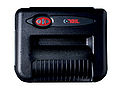 Microflash 8i END OF LIFE Microflash 8i END OF LIFE
|
Receipt 8" Dot-matrix | TA Mobile 5
TA Mobile 6 |
| DataMax O'Neil | 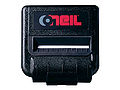 Microflash MF4Te END OF LIFE Microflash MF4Te END OF LIFE
|
Receipt 4" Thermal Printer | TA Mobile 5
TA Mobile 6 |
| Toshiba |  B-EP4DL END OF LIFE B-EP4DL END OF LIFE
|
Receipt 4" Printer | TA Mobile 6
TA Mobile 7 2 (Handheld Compatibility)1 |
| Zebra ZQ520 |  ZQ520 ZQ520
|
Receipt 4" Thermal Printer | TA Mobile 6 (Only Supported on Densos)
TA Mobile 7 (Only supported for Android devices) |
1 This printer is currently only functional with the Denso BHT-1200 rugged handheld device.
Label Mobile Printers
The printers listed below are used for very specific environment and should not be ordered without receiving confirmation from TrackAbout that the application will support the device.
| Manufacturer | Model | Type | Software version |
|---|---|---|---|
| Zebra | RZ400 | RF & Desktop Label Printer | TA Mobile 6 |
| Zebra |  ZT400 ZT400
|
Label 4" Printer | TA Mobile 6, TA Mobile 7 2
(Handheld Compatibility)1 |
| Zebra | ZT410
|
Label 4" Printer | TA Mobile 6, TA Mobile 7 2
(Handheld Compatibility)1 |
1 This printer is currently only functional with the Denso BHT-1200 rugged handheld device.
2 Label printing requires TrackAbout Support to set up label formatting.
Intrinsically Safe Devices
Classes
Class I
Areas in which flammable gases or vapors may be present in sufficient quantities to be explosive or ignitable.
Class II
Areas made hazardous by the presence of combustible dust.
Class III
Areas in which there are easily ignitable fibers or flyings present, due to the type of material being handled, stored or processed-but in which such fibers or flyings are not likely to be in suspension in the air in quantities sufficient to produce ignitable mixtures.
Divisions
Division 1
Normal Situation: A hazard is present in the everyday normal production operation or during frequent repair and/or maintenance activity.
Division 2
Abnormal Situation: Potentially hazardous material is expected to be safely confined within closed containers or closed systems, and will be present in the atmosphere only through accidental rupture, breakage, or abnormal operation.
Groups
Group A, B, C & D
Gases and vapors in Class 1 locations are classified into four groups, by the code A, B, C, and D. These materials are grouped according to the ignition temperature of the substance, its explosion pressure and other flammability characteristics.
Groups E, F & G
Combustible dust in Class II locations are classified according to ignition temperature and the conductivity of the hazardous substance.
